
Commercial Damage Restoration in Houston
Water, fire, mold and storm damage in offices, shops, restaurants and multi-unit buildings, for the people who manage them.
Bellaire Restoration works for landlords, property managers and small businesses such as offices, restaurants and shops, as well as homeowners. The trade is the same, from water extraction and structural drying to mold, fire, smoke and storm work and the rebuild of drywall, insulation, flooring and trim. What changes in a commercial building is how many people one loss touches.
What a Damaged Building Needs
A leak in a house affects one household. A leak in a building can affect tenants, customers, staff, an owner, an HOA board and several insurers at once. Water follows shared walls, floor assemblies and plumbing risers into spaces nobody has reported yet. Smoke rides the HVAC into suites that never saw a flame. In Houston, one tropical storm can put water into every storefront along a strip center in the same afternoon.
Every day a shop or a restaurant stays closed costs money, so the decisions about what to dry and what to tear out have to be made early and explained plainly to whoever approves the work. Many commercial jobs involve more than one claim. The damage is documented with photos and moisture readings and the records are kept organized, which matters when each unit has its own owner or insurer.
Property Types and Their Common Losses
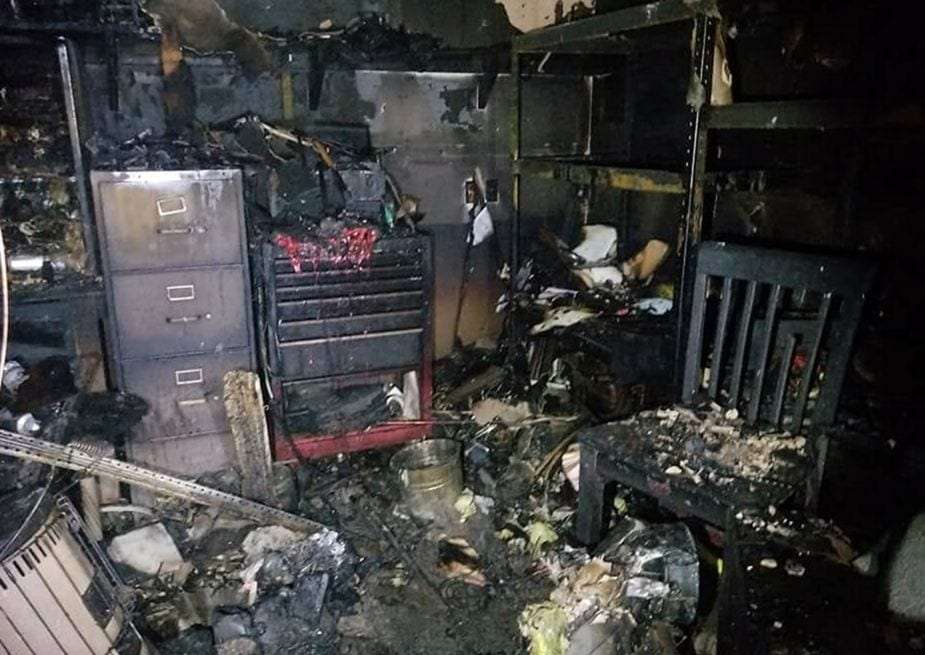
Business fires often start or end in back rooms: a storage room, an electrical closet, a kitchen. Soot settles on files, stock and equipment far from the flames. A filing cabinet or a tool chest that looks only dusty can be coated in acidic residue that keeps staining paper and pitting metal until it is cleaned, which is why soot and odor removal reaches the contents as well as the walls.
| Property type | Common loss | Key consideration |
|---|---|---|
| Office | A burst supply line or AC condensate leak above the ceiling grid; a roof leak over a suite | Wet ceiling tiles, carpet tiles and cabling; files and electronics have to come out of the wet area before drying starts |
| Retail shop | Storm water under the storefront, a backed-up roof drain, a sprinkler line | Stock photographed and listed before it is moved or thrown out; keeping part of the floor in use means sealing off the work area |
| Restaurant | Kitchen fires and grease smoke; leaks from dishwashers, ice machines and walk-in coolers | Food and packaging that sat near smoke or water is thrown out; the health department may need to approve reopening |
| Apartment building | A leak in an upper unit that runs down through ceilings and along shared walls | Units beside and below need moisture checks too, and each tenant has to give access |
| Condo or HOA building | A failed water heater, toilet supply line or riser that reaches several units | The HOA’s master policy and each owner’s own policy may cover different parts of the damage |
| Storage or warehouse space | Fire, roof leaks, water from a broken sprinkler head | Stock and records sorted for cleaning or disposal; soot reaches high shelving and the underside of the roof |
Single-Unit Loss vs. Multi-Unit Spread
The first question in an apartment or condo building is whether the damage stayed where it started.
When the Damage Stays in One Unit
A leak caught early, from a sink or a washer hose in a ground-floor unit on a slab, often stays inside one set of walls. That means one owner or tenant, one insurer and one set of decisions. The work looks much like it would in a house: extraction, drying, the tear-out of anything that wicked water, then the rebuild.
When Water Crosses Into Other Units
Upstairs, water goes down through the floor, along the joists and into the ceiling of the unit below, and sideways along the bottom of shared walls. A riser or a main line can wet several floors at once. Moisture has to be checked in the units on each side and below, not just the one that called, and each affected unit needs its own photos and readings. Shutoffs may serve a whole floor or the whole building, so the manager often has to decide who goes without water while the line is repaired.
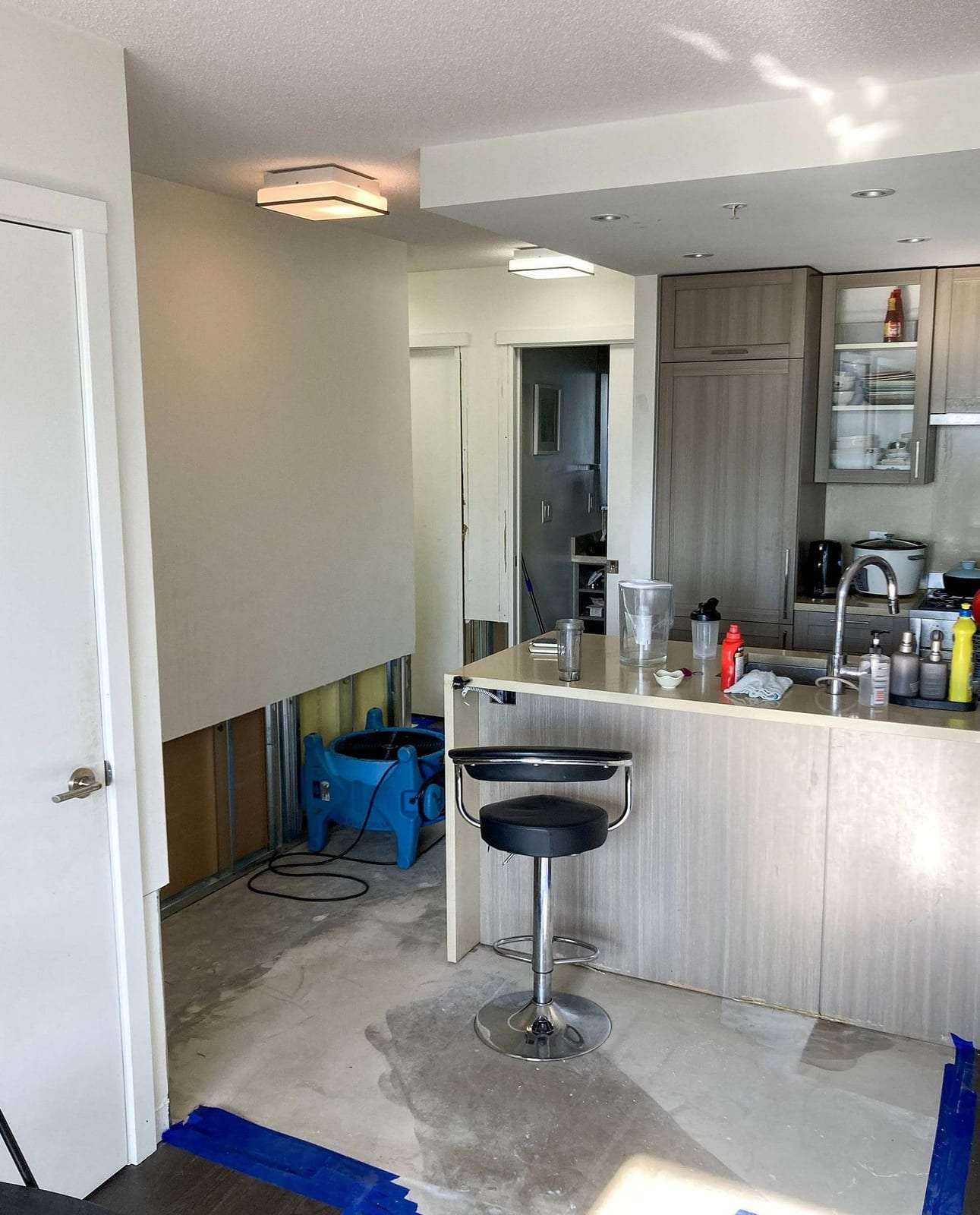
Drying a multi-unit building means air movers and LGR dehumidifiers running in several homes at once, often with people still living in them. Tenants need to know the equipment stays on until the moisture readings say the structure is dry.
Information to Have Ready When You Request Service
- Building type and size: office, shop, restaurant, apartment or condo, and the number of floors and units.
- Affected units or areas: unit or suite numbers, floors, and common areas such as halls, stairs or the lobby.
- Water shutoff location: the main, any floor or riser valves, and who holds the key to the mechanical room.
- Tenant access: a contact for each affected unit, keys or door codes, and any notice the lease or HOA rules require before entry.
- Photo list: the source, each affected unit, the ceilings below, and damaged stock or equipment.
- Insurance and approval: whose policy applies, the claim number if there is one, and who can approve the work.
- Building age: for a building from before about 1980, any asbestos survey on file; Texas generally requires one before renovating commercial and larger apartment buildings.
Send what you have through Book a Visit, and add the rest once the source is stopped.
Tenants and Keeping the Building in Use
How should we tell tenants about the work?
Tell each affected tenant which rooms are involved, what equipment will be running and that it has to stay on, and how access will work. Ask them to photograph their own belongings and call their renter’s insurance, since the building’s policy usually doesn’t cover a tenant’s contents.
Can part of the building stay in use during restoration?
Often, yes. Plastic containment and negative air can seal a work area off from the rest of a floor, and drying equipment can run in one suite while the others stay in use. Exits and fire doors have to stay clear. A kitchen fire or a sewage backup in a restaurant usually closes that space until it is cleaned.
Do tenants have to move out?
Not usually for a clean-water leak. Sewage, mold containment over a large area, a unit without water or power, and ozone treatment are the common reasons a tenant stays somewhere else for part of the job.
Who pays when water from one unit damages another?
That depends on the cause, the lease or the HOA’s rules, and the policies involved, and the adjusters sort it out between them. Photos and moisture readings for each affected unit make that easier for everyone.
Damage in a Building You Manage
Call with the building type and the affected units, or book a visit and list them in the request.