
Storm Damage Repair in Houston
Emergency board-up, roof tarping and water removal after wind, hail, fallen trees and wind-driven rain.
Close the House, Then Dry What Got Wet
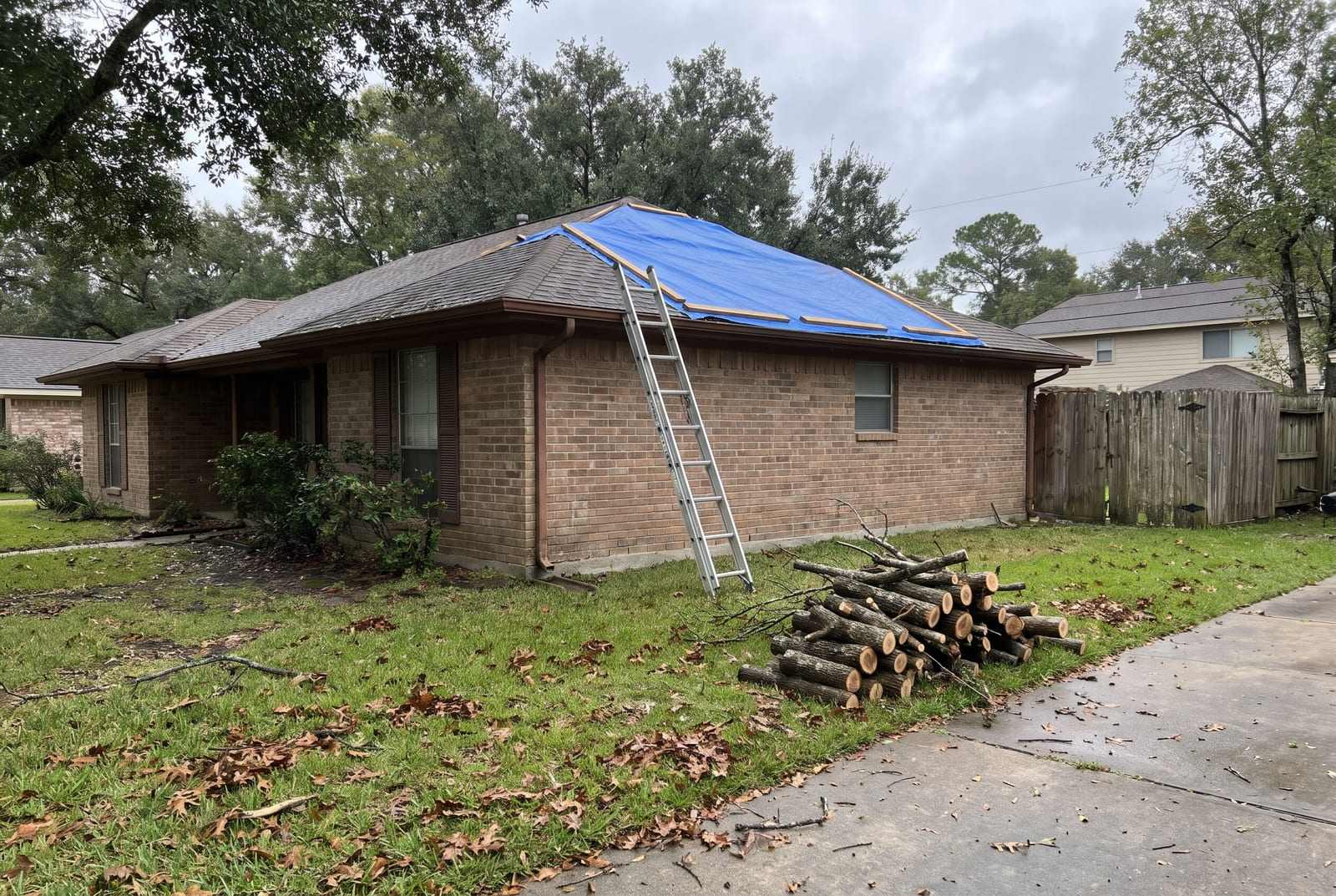
Storm damage gets worse with every rain that follows the storm, so the first job is to close the building. Emergency board-up goes over broken windows and doors. A roof tarp goes over missing shingles, a hole from a limb or a section the wind peeled back. A tarp done properly runs up over the ridge so water sheds off it, and it’s held down with wood battens, not a few nails through the plastic. It holds until the roof is permanently repaired.
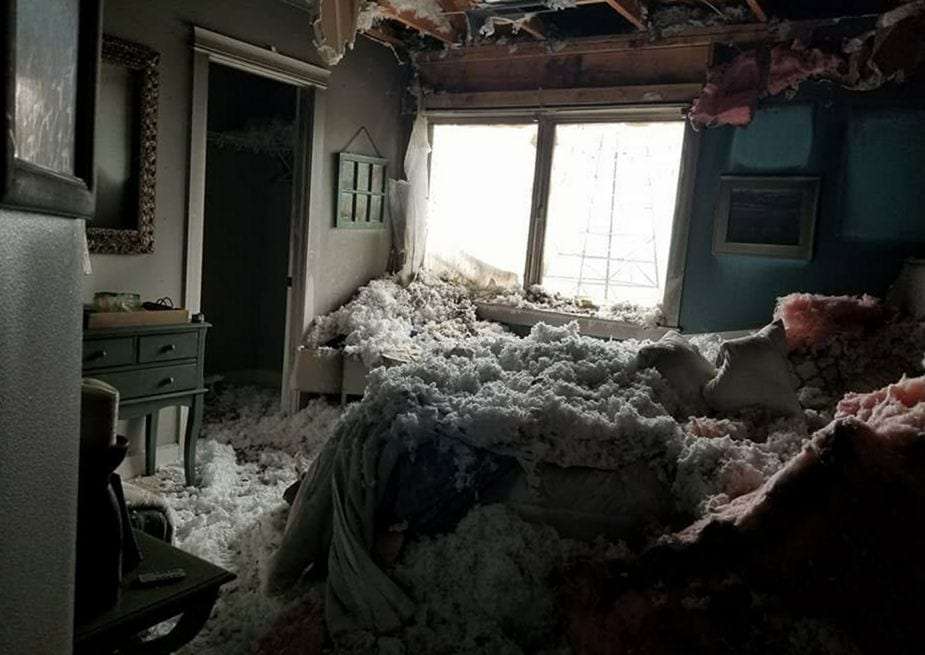
Then comes the water that already got in. Rain through a damaged roof soaks the attic insulation first, and wet insulation holds water against the ceiling drywall until the ceiling sags or comes down. Wind-driven rain gets into wall cavities around windows and doors where nobody can see it. Storm water removal means extraction, tearing out ceiling drywall and insulation that can’t be dried, then structural drying with air movers and dehumidifiers. After that, the crew rebuilds the drywall, insulation, flooring and trim.
Storm Damage Types and First Steps
Each kind of storm damage has a step that stops it from spreading, and work that follows once the weather clears.
| Damage type | Typical cause | Immediate protective step | Follow-up restoration |
|---|---|---|---|
| Missing or lifted shingles | Hurricane gusts and straight-line winds | A roof tarp secured with battens | Attic and ceiling dried, wet insulation replaced |
| Hail damage | Hail in spring thunderstorms | Photos, then a tarp over punctures and board-up of broken glass | Water removal where it got in, then repairs |
| Tree or limb on the roof | High wind on trees in soaked ground | A tree crew removes the tree, then the opening is tarped | Water removal, drying and rebuilt ceilings and walls |
| Wind-driven rain | Rain bands pushed sideways around windows, doors and vents | Belongings moved, drips caught, wet spots photographed | Moisture readings in the walls, extraction and structural drying |
| Broken windows and doors | Flying debris and wind pressure | Board-up with plywood | Wet framing and flooring dried, damaged trim replaced |
| Rising water | Street and bayou flooding from heavy rain | Stay out until the power is off | Flood cleanup: tear-out, cleaning and drying |
Hurricane Season and Spring Storms
The Atlantic hurricane season runs from June 1 to November 30, and the busiest stretch usually falls from August into October. A hurricane or tropical storm brings sustained wind and long bands of rain that blow sideways, so damage shows up at roof edges, ridges and around windows, not only where a tree comes down.
Spring brings a different pattern. Severe thunderstorms move across the Houston area with large hail, straight-line winds and tornado-warned cells. Hail damage on a roof isn’t always visible from the ground, so a leak from it can show up weeks later as a stain on a ceiling.
Photograph and Note the Damage Before Temporary Repairs
Photos taken before the tarp goes on show what the storm did. Take them from the ground and from inside; don’t climb onto a wet or damaged roof.
- Each side of the house and the roof, wide enough to show where the damage sits.
- Close-ups of every damaged spot: missing shingles, holes, dented gutters and vents, broken glass, the tree or limb where it landed.
- Hail dents with a coin or a ruler beside them for scale, and the hailstones if they’re still on the ground.
- Every ceiling stain, sag, drip and wet spot inside, with enough of the room in the frame to show where it is.
- Wet belongings before you move them, and the model and serial numbers of damaged electronics and appliances.
- Notes: when the storm hit, when you first saw water inside, which rooms, what you did to stop it, and receipts for anything you bought.
Most homeowner policies expect reasonable steps to prevent further damage, so a tarp shouldn’t wait for the adjuster: photograph first, then cover. Many of our jobs involve insurance claims, and the damage is documented with photos and moisture readings, with the records kept organized.
Power Outages and Hard Freezes
Storms often take the power with them. Without air conditioning, a closed-up house turns humid fast, and anything that got wet stays wet longer, which is how a small roof leak turns into mold. If you run a generator, keep it outside and well away from doors and windows, never in the garage.
Hard freezes are rare here, and that is the problem. Many homes have water lines in the attic or in exterior walls with little insulation, and when the February 2021 winter storm brought days below freezing and long power outages, pipes burst across Houston. The damage usually shows at the thaw, when a split line in the attic starts running through the ceiling. Before a hard freeze, know where the main shutoff is, let faucets drip and open the cabinet doors under sinks. A burst pipe is a water damage job: shut the water off first, then call.
Tarps, Attic Water and Fallen Trees
How long can a roof tarp stay on?
A tarp is a temporary repair that keeps water out until the roof is fixed, not a substitute for the fix. Sun breaks the material down and wind works the battens loose, so check it after every storm and get the permanent repair scheduled.
There’s standing water in the attic. What should I do?
Keep people out of any room where the ceiling sags, turn off the breakers for lights and fans under the wet area, and set buckets under the drips. Don’t step between the joists: the ceiling drywall won’t hold your weight. Wet insulation keeps the ceiling soaked, so it usually has to come out before the attic and the ceiling below can dry.
A tree fell on the house. Who do I call first?
Call 911 if anyone is hurt, a power line is down or you smell gas, and keep everyone out of the rooms under the tree. Getting a tree off a roof is a job for a tree crew. Once it’s off, the restoration side starts: tarping the opening, removing the water and drying the structure, then rebuilding what had to come out.
Rain Still Coming In?
Book a visit for board-up, roof tarping or water removal, or call if water is getting into the house now.