
Flood Cleanup in Houston
Cleanup after bayou overflow, street flooding and hurricane or heavy-rain flooding that gets into Houston homes and businesses.
Floodwater Is Not Leak Water
A burst pipe puts clean water into a house. Floodwater from a bayou, a ditch or a flooded street has crossed yards, roads and parking lots and backed up through storm drains and sewers. It carries sewage, fuel, lawn chemicals and mud, and industry standards such as the IICRC S500 treat it as Category 3 water from the moment it comes in.
That changes the job. After a clean-water leak, a lot of drywall, carpet and framing can be dried in place. After a flood, anything porous the water touched is treated as contaminated and comes out. What stays, such as studs, the slab and solid wood, is cleaned of silt, treated with an antimicrobial and dried before anything goes back.
Before You Re-Enter a Flooded Building
Wait until the water has gone down and local officials say the area is safe. Then, before anything else:
- Power off at the panel. Switch off the main breaker before you walk in, but only if you can reach the panel without standing in water. If the panel is in a wet area, leave it for the electric utility or an electrician.
- Boots and gloves on. Wear rubber boots and heavy gloves. Floodwater and the mud it leaves carry sewage, and the debris hides nails, glass and sharp metal.
- Watch for snakes and debris. Snakes come in with the water and hide under furniture and in debris piles, and fire ants float in mats during Texas floods. Move things with a tool, not your hands.
- No wet electronics. Do not plug in, switch on or test anything that was under water, including outlets, appliances and the air handler, until an electrician has checked it.
- Leave if you smell gas. Get out and call the gas company from outside.
- Photos first. Photograph the water line on the walls and every damaged room and item before anything is moved or thrown out.
The Stages of a Flood Cleanup
Flood cleanup runs in a set order. Skipping a stage, such as closing the walls before the framing is dry, is how mold ends up inside new drywall.
| Stage | What happens | Why it matters |
|---|---|---|
| Water and mud out | Standing water is pumped and extracted; silt is shoveled and rinsed off the floors | Standing water keeps wicking up the walls, and silt holds bacteria |
| Documentation | The water line, damaged materials and contents are photographed; moisture readings are recorded | An insurance claim needs a record of what was damaged and how high the water rose |
| Contents and debris out | Wet furniture, rugs and boxes come out; what can be cleaned is set apart | Wet contents keep the rooms damp and block the walls |
| Tear-out | Wet drywall is flood cut; wet insulation, carpet, pad and swollen flooring come out | Contaminated porous materials cannot be cleaned |
| Cleaning and antimicrobial | Studs, slab and subfloor are washed of silt and treated with an antimicrobial | What floodwater leaves behind feeds mold |
| Structural drying | Air movers and dehumidifiers dry the open framing and slab while readings track progress | Walls closed over wet studs trap moisture and odor |
| Rebuild | Insulation, drywall, flooring and trim go back once the readings show dry | The building goes back together over clean, dry framing |
Tearing Out Wet Drywall, Insulation and Flooring
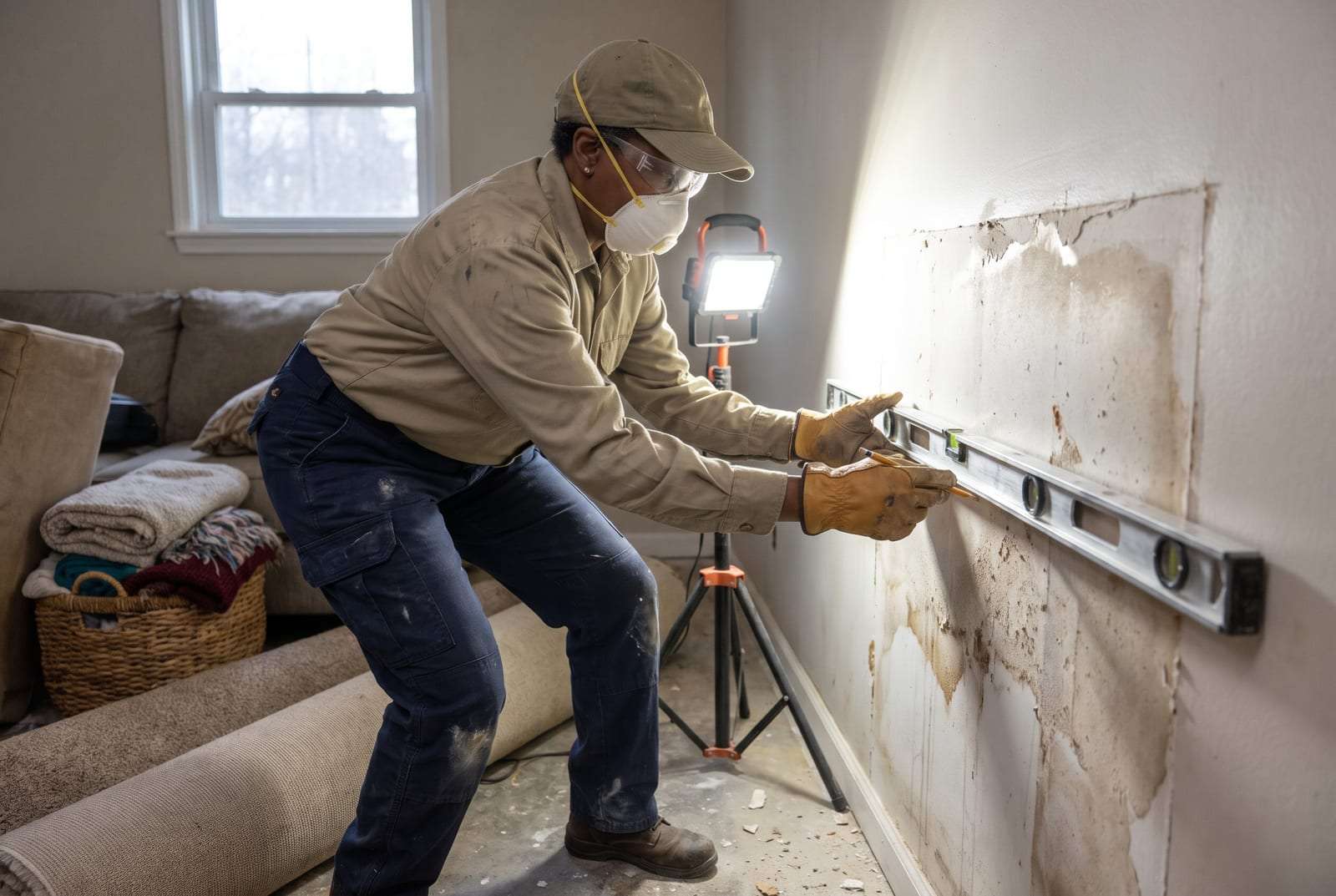
Drywall wicks floodwater upward, past the line you can see. The flood cut is a straight, level cut along the wall above the highest wet reading, often at a height that matches part of a drywall sheet, so the new board goes back in clean strips instead of patches. Everything below the cut comes out, and the wall cavity is open to clean and dry.
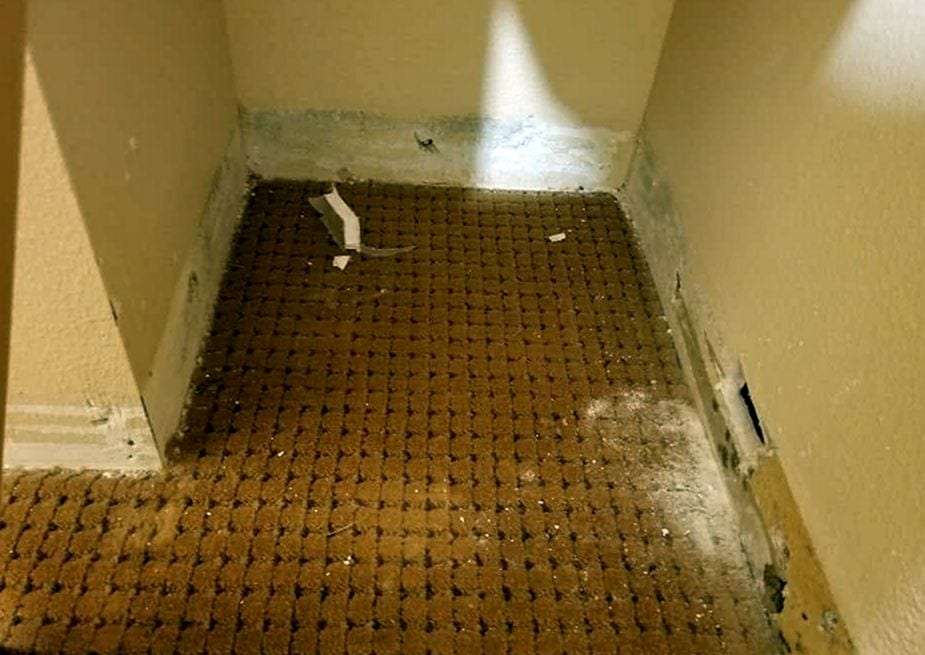
Insulation behind flooded drywall comes out with it: fiberglass batts hold water, sag and cannot be cleaned. Carpet and pad go too. Laminate and engineered wood usually come up; tile set on a slab can often be cleaned and kept.
Baseboards and trim come off so the bottom of the wall can be reached. Solid wood trim can sometimes be cleaned and reused; MDF trim swells and cannot. Particleboard cabinet boxes that sat in water are replaced. We explain what can be dried and what has to go before the tear-out starts, so it stops where the damage stops.
Gulf Coast Floods and Rebuilding Permits
Houston floods from more than hurricanes. Hurricane Harvey in August 2017 stalled over the region and flooded homes that had never taken water before. Heavy spring and summer storms can drop enough rain to fill streets and push bayous such as Brays Bayou over their banks. Large parts of Harris County sit in mapped floodplains, and low streets flood in storms that never get a name. When wind comes with the water, the roof and windows may need storm damage repair as well.
Before rebuilding, check with the City of Houston permitting office, or with Harris County if the property is outside the city limits, about permits and floodplain rules. Bellaire and West University Place are separate cities with their own permit offices. In a floodplain those rules can change what a rebuild has to include, so ask before new drywall goes up.
What Can Be Saved After a Flood
Can furniture be saved after a flood?
Solid wood and metal furniture can often be cleaned, disinfected and dried slowly, out of direct sun so the wood does not split. Upholstered furniture, mattresses and box springs that sat in floodwater soak it up deep inside and are usually thrown out. Particleboard pieces swell and come apart.
What about photos, papers and keepsakes?
Rinse mud off photos gently with clean water and lay them flat to dry, or seal them in plastic bags and freeze them until there is time to deal with them. Important papers can be frozen the same way. Hard keepsakes can be washed and disinfected.
Can clothes and linens be washed?
Often, yes. Rinse out the mud, wash them in hot water with detergent, and throw out anything that still smells or stains after another wash. Take dry-clean-only items to a cleaner and say they were in floodwater.
Start Once the Water Drops
Call when it is safe to go back in, so the tear-out, cleaning and drying can start before mold sets in.