
Water Damage Restoration in Houston
Water pulled out and the structure dried after burst pipes, appliance leaks, slab leaks and roof or AC leaks in Houston homes and businesses.
What Extraction and Structural Drying Involve
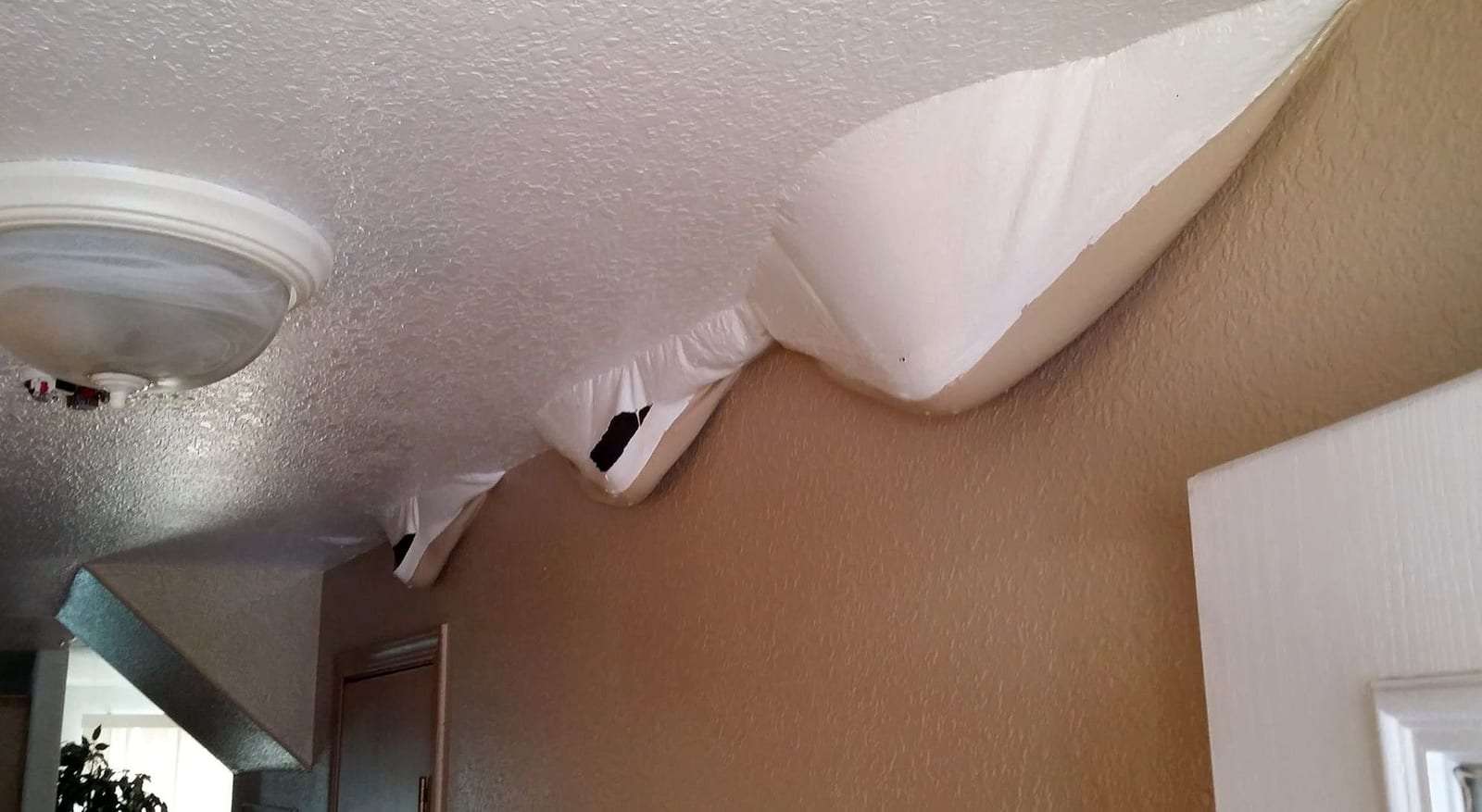
Water damage is the job we handle more than any other: a burst supply line, a failed water heater, a split washer hose, a slab leak, or a roof or AC leak dripping through a ceiling. What you see is the smaller part; the rest wicks up the drywall and settles into the pad, the subfloor and the framing.
Extraction comes first, pulling the standing water out of the carpet, pad and floors. Structural drying then takes out what is left inside the materials, with air movers, dehumidifiers and moisture readings, until wet materials read the same as dry ones elsewhere in the building. Once the structure reads dry, we rebuild what had to come out, from drywall and insulation to flooring and trim, the last step in how a restoration job runs.
Clean, Gray and Black Water
Industry standards such as the IICRC S500 sort water into three categories by contamination. The category decides what can be dried and what has to go, and clean water left in a warm, closed house soon counts as Category 2 or 3.
| Category | Typical source | Health concern | Materials usually removed vs. dried |
|---|---|---|---|
| Category 1: clean water | A burst supply line, a water heater, an ice maker line | Low at first, rising as the water sits | Drywall, framing, carpet and pad can often be dried in place if drying starts early |
| Category 2: gray water | Washer or dishwasher discharge, a toilet overflow without waste | Can cause illness on contact or if swallowed | Pad usually comes out; carpet, drywall and framing are often cleaned, treated and dried |
| Category 3: black water | A sewage backup, floodwater from a bayou or the street | Bacteria, viruses and chemicals; keep children and pets away | Carpet, pad, insulation and wet drywall come out; hard surfaces are cleaned, treated and dried |
Floodwater is always Category 3, so flood cleanup treats anything porous it touched as contaminated.
Drying Equipment and Where It Goes
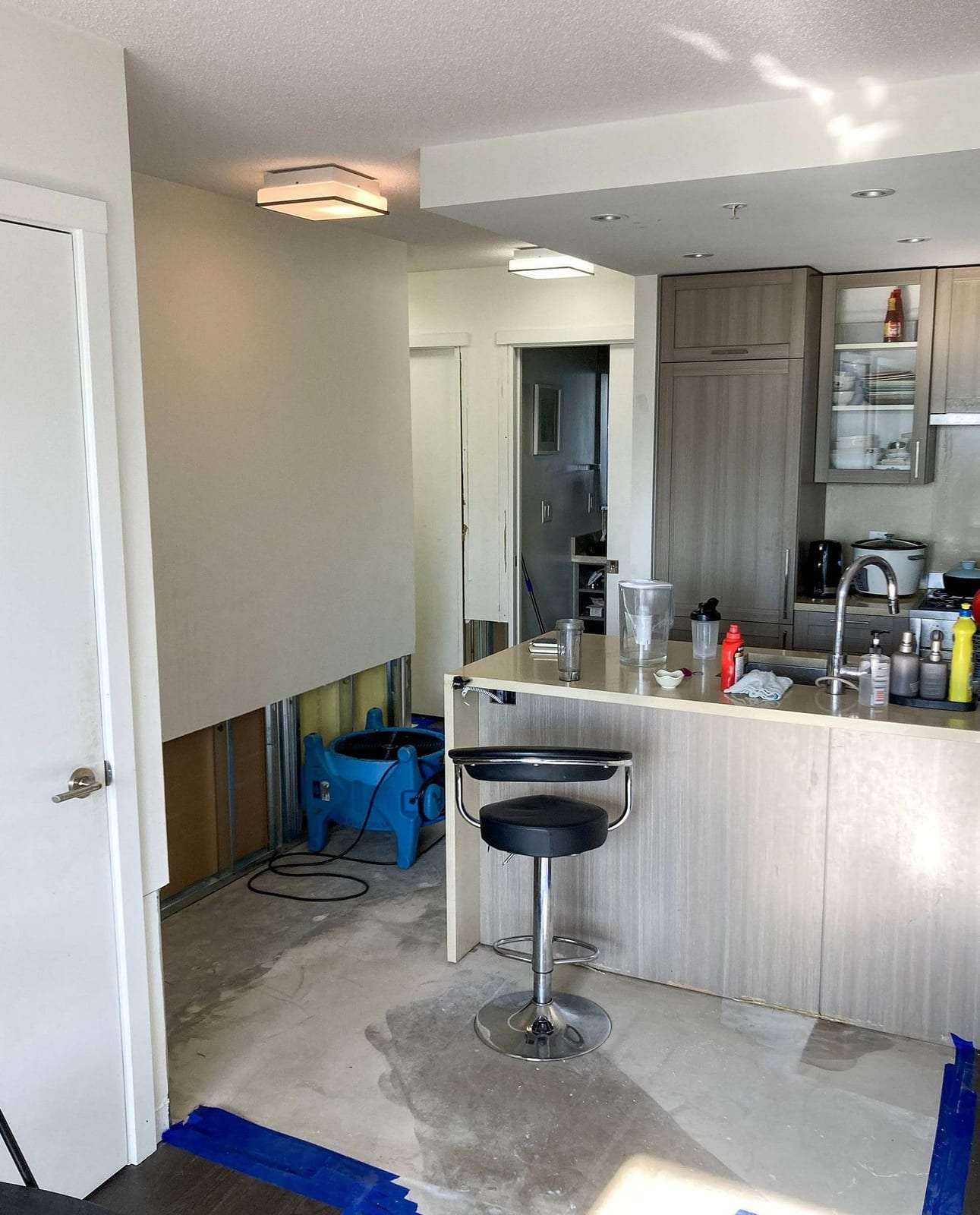
A fan in the doorway does not dry a house. The setup is laid out around the wet materials, and it changes as the readings drop.
| Equipment | What it does | Where it is used |
|---|---|---|
| Extraction units | Pull standing water out of carpet, pad and hard floors | Every wet floor, before any drying |
| Air movers | Push fast air across wet surfaces so the water evaporates | Along wet walls, under toe kicks, across floors |
| LGR dehumidifiers | Pull the evaporated water out of the air and drain it away | Inside the closed-off drying area |
| Cavity drying systems | Push dry air into walls and under cabinets through small holes | Behind cabinets and built-ins |
| Moisture meters and thermal cameras | Show where the water went and when each material is dry | Walls, floors and ceilings, at every check |
Houston Humidity and Attic AC Leaks
The air here is damp most of the year, and that slows drying: moisture pulled out of a wall meets more humid air every time a door opens. Drying works best in a closed-off area with the AC running. The same humidity lets mold start on wet drywall and pad within a day or two, so a leak left over a weekend can mean mold removal as well.
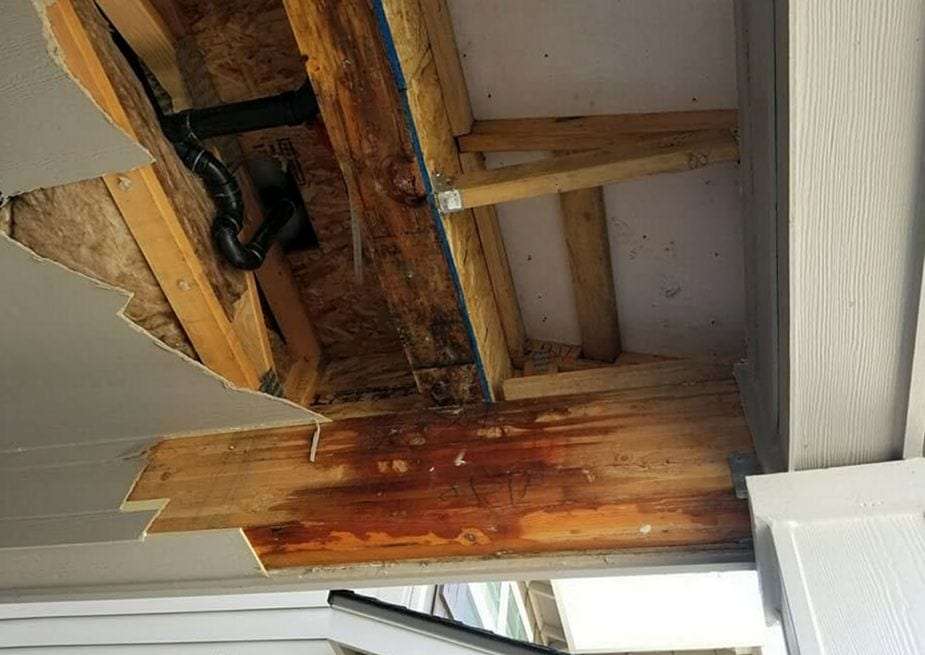
Many local leaks start with the AC. The air handler often sits in the attic, and when its condensate line clogs or its pan rusts through, the water lands on the ceiling below: a brown ring, a sag or bubbling paint near a vent. Turn the system off at the thermostat, put a bucket under the drip and keep out from under a sagging ceiling.
Slab Homes and Pier-and-Beam Homes
Most newer houses in the area sit on a concrete slab. A leak in a line under it can wet the floor from below with only a warm spot or a damp baseboard to show for it, and the plumbing repair comes first. Concrete gives up water slowly, so laminate, engineered wood and pad over a wet slab usually come up; tile often stays.
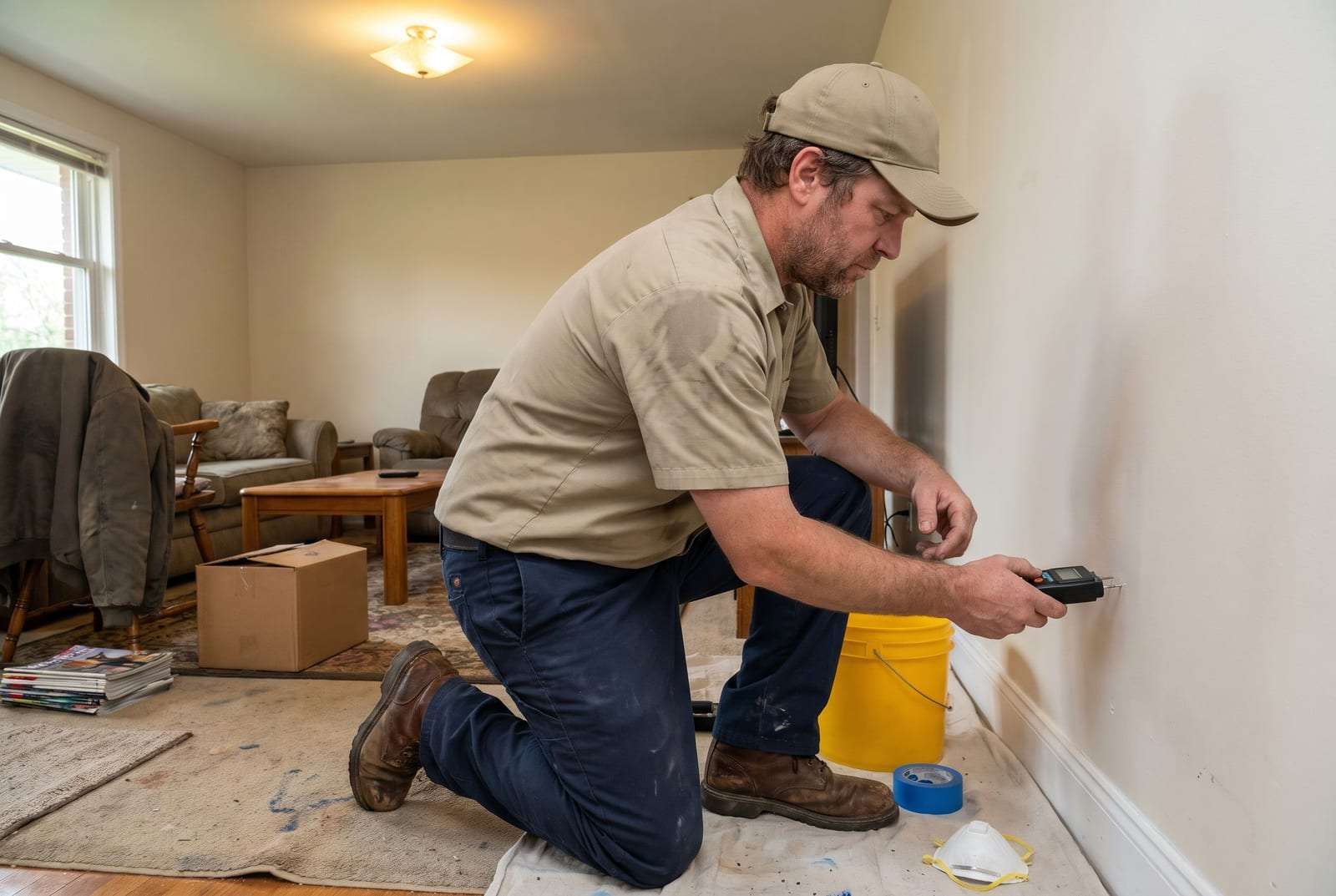
Many older homes in the Heights and Montrose sit on pier and beam over a crawlspace. Water runs between the floorboards and pools on the ground below, and the crawlspace stays wet long after the rooms look dry. Drying there means pulling out the standing water, moving dry air under the floor and taking readings on the joists, not only in the room above.
What Changes the Scope of a Water Job
Pick what you know and press Explain to see how each factor changes the work. No prices: the moisture readings on site settle the scope.
Choose the answers above and press Explain.
Dried in Place or Torn Out
What makes water damage worse the longer it sits?
Time. Drywall and pad keep wicking water, so the wet area grows. Particleboard swells and does not go back, and hardwood cups. Clean water turns dirty, and mold can start within a day or two. The sooner the drying starts, the more of the house stays.
Can wet drywall be dried, or does it have to come out?
Drywall wet with clean water and dried early can often stay. It comes out when the water was Category 3, when the board has swollen or sagged, when mold has started, or when the insulation behind it is soaked. Then a flood cut, a straight cut above the highest wet reading, removes the damaged part and opens the wall to dry.
What about carpet, hardwood and cabinets?
Carpet wet with clean water can often be dried in place; the pad is usually replaced after gray water and always after black water. Hardwood that has only started to cup can sometimes be dried flat with floor drying mats. Particleboard cabinet boxes swell and are replaced, while solid wood cabinets can often be dried once the toe kick is off.
Get the Water Out Early
Shut the water off, take photos and call, so the drying starts before more of the house has to come out.