
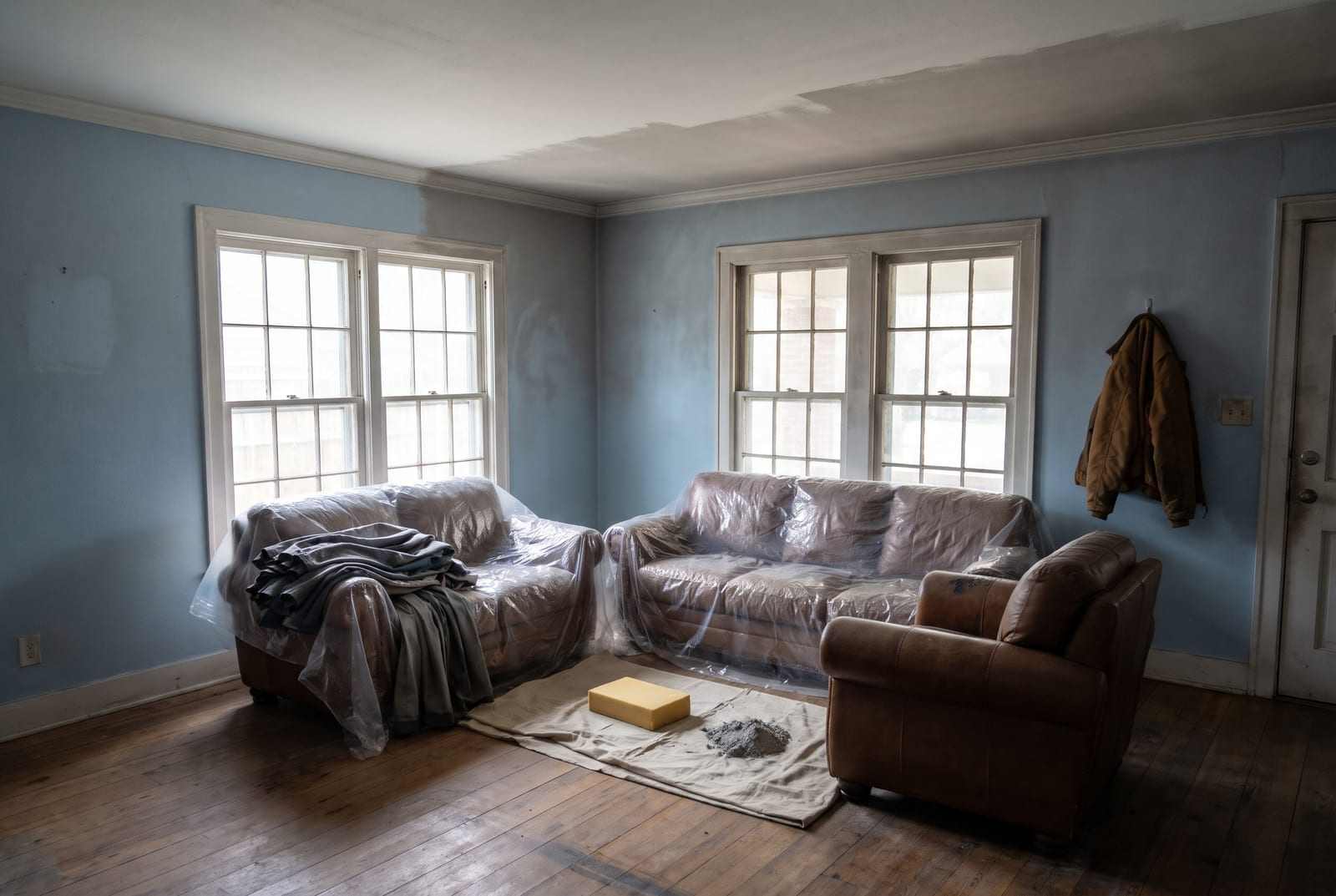
Fire & Smoke Damage Cleanup in Houston
Soot removal, odor control and cleaning of the structure and contents after kitchen and electrical fires.
Smoke Travels Farther Than the Fire
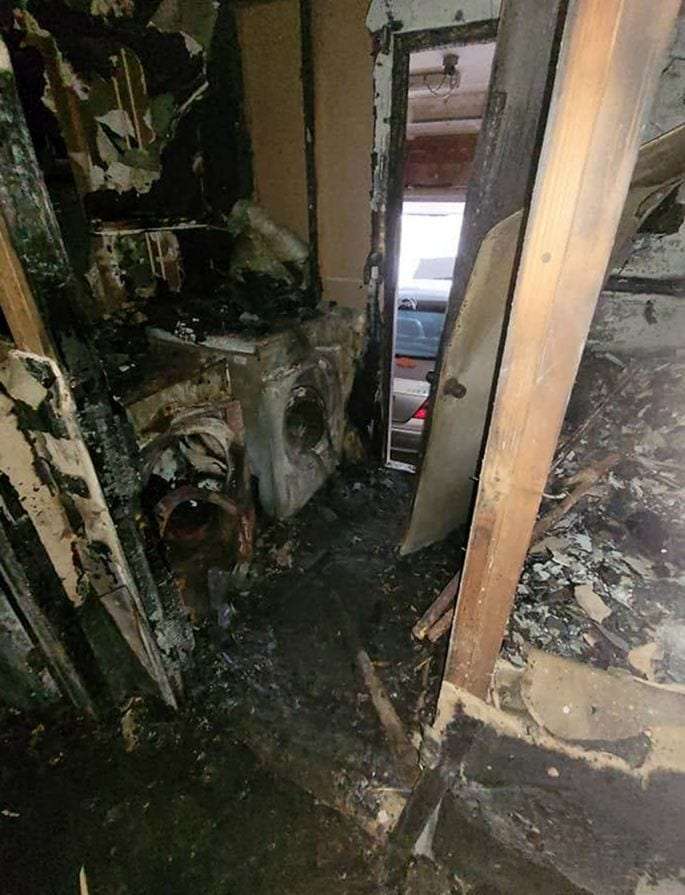
A fire that never leaves the kitchen or the laundry room still sends smoke through the house. Soot settles on ceilings, walls and the tops of doors and gets pulled into the return vents. A grease fire on the stove leaves a film most people can’t see. An electrical fire in a wall, a dryer or a power strip leaves black, oily residue and a sharp burnt-plastic smell. Both keep working on paint, metal and fabric after the flames are out.
The cleanup comes in three parts. Soot removal takes the residue off ceilings, walls, framing, cabinets and floors, dry methods first, then wet cleaning. Odor control goes after the smell where it lives, in porous materials, wall cavities and ducts, with HEPA air scrubbers, thermal fogging, hydroxyl generators or, in empty rooms, ozone. Contents cleaning covers what was in the rooms. What can’t be cleaned comes out, and once the house is clean and dry, the crew rebuilds the drywall, insulation, flooring and trim.
Smoke Residue Comes in Several Kinds
What burned decides the residue, and the residue decides the cleaning method.
| Residue type | Typical source | Look and smell | Cleaning approach |
|---|---|---|---|
| Dry smoke | Fast, hot fires in paper and wood | Powdery gray or black film; wood-fire smell | Dry sponge and HEPA vacuum, then wet cleaning |
| Wet smoke | Smoldering plastic, foam and rubber | Sticky black film that smears; acrid smell | Degreasers and agitation; porous materials often removed |
| Protein residue | Food burned on the stove or in the oven | Thin yellow-brown film, hard to see; strong, clinging smell | Degreaser on every surface, inside cabinets too, then deodorizing |
| Plastic and wire residue | Electrical fires in wiring, outlets and appliances | Oily black staining at the source; burnt-plastic smell | An electrician clears the circuit, then wet cleaning and odor sealing |
| Extinguisher powder | A dry-chemical extinguisher used on the fire | Fine yellow or white dust, little smell | HEPA vacuumed and wiped soon: it corrodes metal and electronics |
A dry sponge only smears a wet-smoke film, and a wet cleaner drives dry soot into the paint, so restoration crews usually test a small patch first.
What to Avoid After a Fire
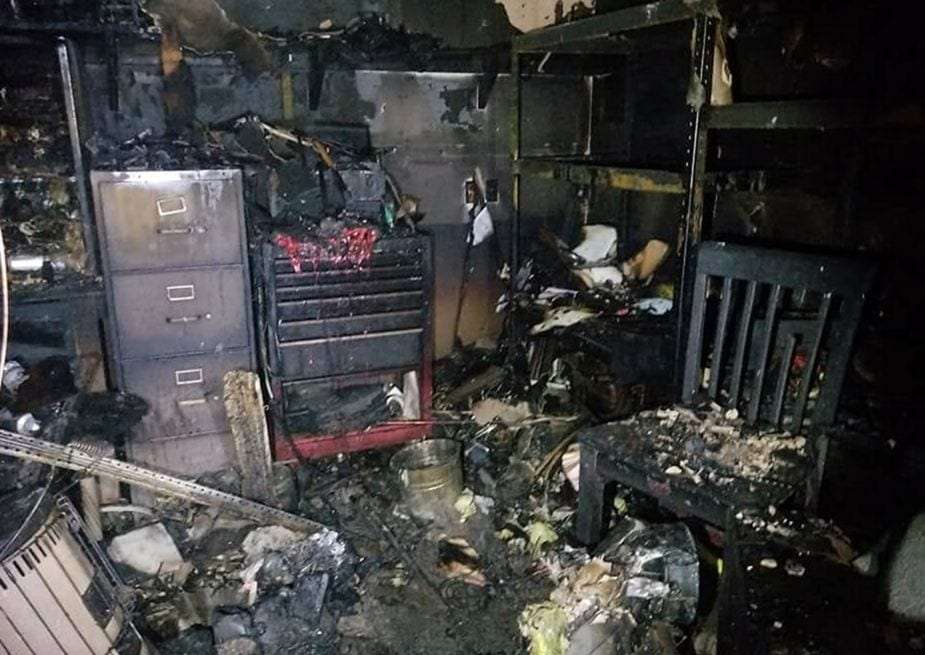
Until the cleanup starts, a few natural reactions make the damage worse. Soot is acidic and oily: the longer it sits, the more it etches metal and yellows paint and plastic, and every wipe or blast of air moves it somewhere new.
- Don’t wipe soot off walls, ceilings, lampshades or upholstery. Rubbing grinds it in and turns a cleanable film into a stain.
- Don’t run the HVAC. It pulls soot into the ducts and blows it into rooms the fire never reached. Even on a hot Houston afternoon, leave it off until the system is checked and the filter changed.
- Don’t eat or drink anything exposed to smoke, heat or firefighting water, including open pantry goods and canned food that got hot.
- Don’t go into rooms with burned floors, sagging ceilings or damaged stairs until the fire department or a qualified inspector says it’s safe.
- Don’t switch on lights or appliances in fire-affected rooms until an electrician has checked the circuits.
Firefighting Water Needs Drying Too
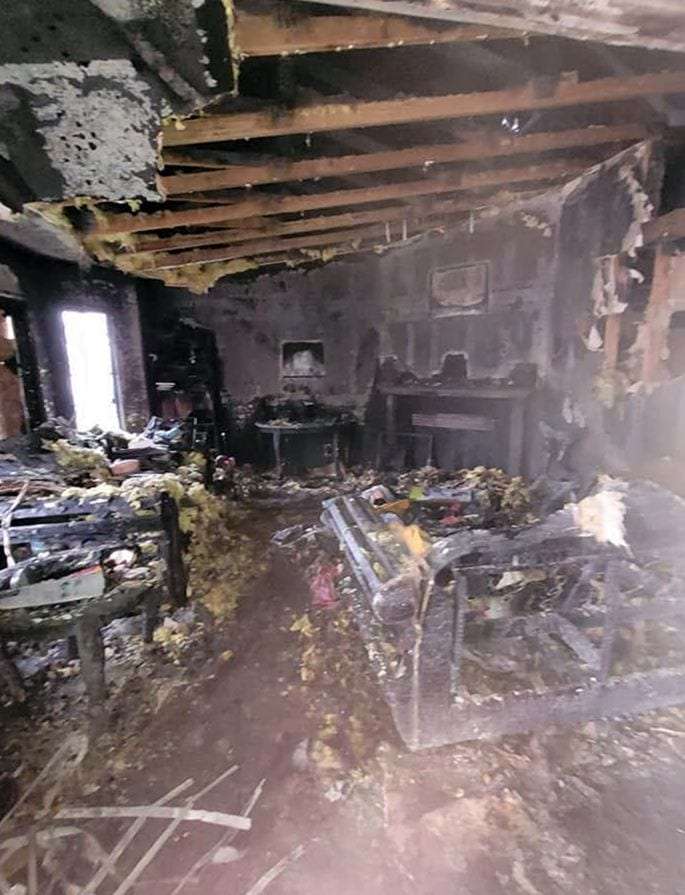
The water that put the fire out stays in the house. Hose streams soak ceilings, walls, insulation and subfloors, and the water runs into rooms the fire never touched and down to the floor below. It carries soot and debris, so it’s treated as contaminated water, not clean water from a supply line. Ceiling drywall sags under soaked insulation, and studs hold moisture long after the surface feels dry.
It needs the same extraction and structural drying as any other water loss: standing water pulled out, wet materials that can’t be saved cut out, then air movers and dehumidifiers running while moisture readings are taken until the framing is dry. Wet drywall can start growing mold within a day or two, so on most fire jobs the drying runs alongside the soot cleanup.
Clean and Deodorize or Remove and Replace
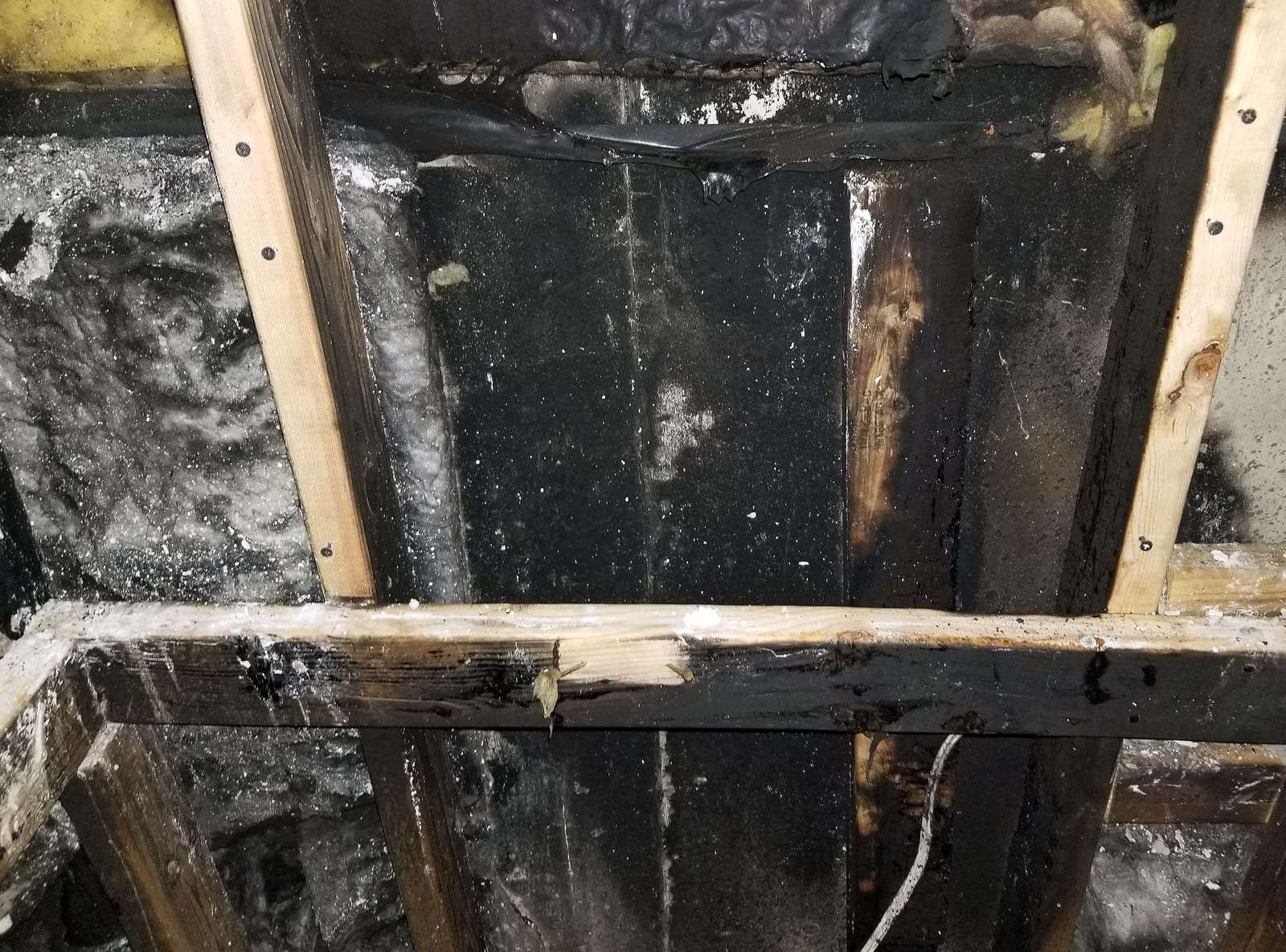
Not everything a fire touches has to go, and not everything that looks clean can stay. It depends on how much heat a material took, whether it got wet and how deep the smoke went. Porous materials hold odor; hard surfaces usually give it up. Charred framing can often be cleaned, sanded and sealed instead of replaced, as long as the char is shallow and the wood is sound.
| Material | Usually cleaned and deodorized when… | Usually removed and replaced when… |
|---|---|---|
| Drywall | Soot sits on sound paint and the board stayed dry | It’s charred, blistered or soaked, or the odor has gone into the paper face |
| Carpet and pad | A light smoke film, with no heat damage or soaking | Fibers are melted or singed, or firefighting water soaked the pad |
| Wood | Surface soot or shallow char that sands off | Char runs deep enough to weaken framing, or the floors and cabinets have warped |
| Upholstery | Durable fabric, light smoke, no heat damage | The fabric is scorched, or the foam still holds the odor after cleaning |
| Electronics | Smoke exposure only, cleaned before the soot corrodes them | They were heated, melted or wet; don’t power them on until they’re checked |
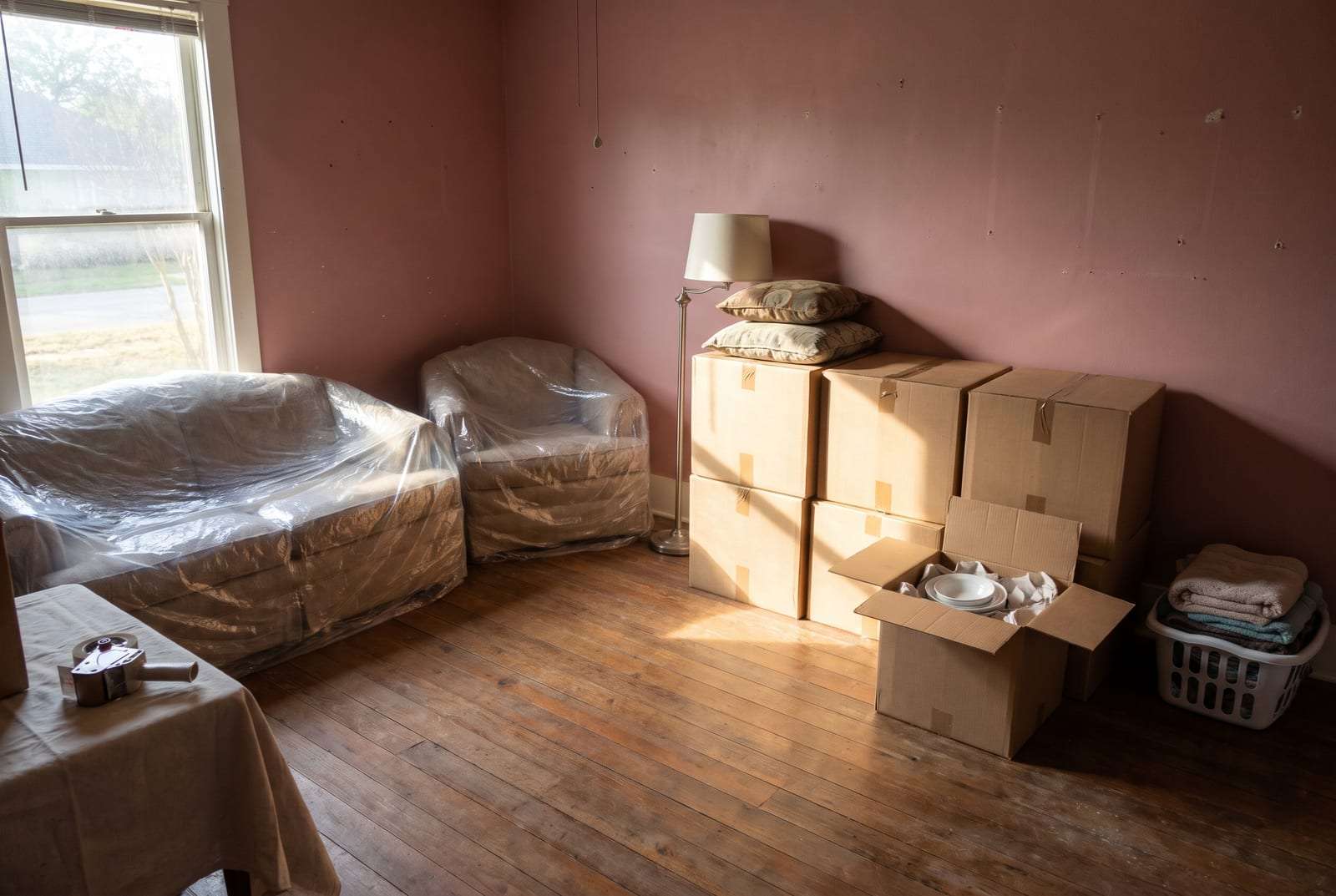
On a bigger fire, restoration crews usually pack out the contents, wrapping the furniture and boxing belongings, so the walls and ceilings can be cleaned and each item sorted into what can be saved and what can’t.
Lingering Odor and What Can Be Saved
Why does the smoke smell come back weeks after the cleanup?
Because some residue is still there. Smoke works into wall cavities, attic insulation, ducts and anything porous, and warm, humid days release the smell again. Lasting odor control means removing that residue, changing the filter and cleaning the ducts, deodorizing with thermal fogging or a hydroxyl generator, and sealing cleaned framing with an odor-blocking primer before new drywall goes up.
Which belongings can usually be cleaned?
Hard, non-porous things clean well: dishes, glass, metal, sealed wood furniture and most hard plastics. Clothing, curtains and linens often come clean with the right laundering and deodorizing. Mattresses, pillows, foam cushions and paper take smoke deep and are harder to save, and anything charred or melted is usually a loss. Photograph and list what you throw away.
Get the Soot and Smell Out
Book a visit for soot, odor and contents cleaning, or call if firefighting water is still in the house.