
Mold Removal in Houston
Mold remediation for Houston properties where humidity, a leak or past flooding has left mold growing.
Remediation Is More Than Cleaning the Surface
Wiping a spot off the wall changes how it looks, not what is behind it. Mold grows into drywall paper, insulation and carpet pad, and it keeps growing while the moisture is there. A spray and a rag leave the growth inside, and scrubbing a dry patch sends spores into the room.
Remediation deals with the cause and the material: the moisture source is fixed, the area is sealed off and its air filtered, and mold-damaged porous materials are cut out and bagged. Industry standards such as the IICRC S520 describe this order of work. Once the area is clean and dry, we rebuild what had to come out: drywall, insulation, flooring and trim.
Where Mold Usually Grows
Mold turns up in the same places again and again, and almost every one has a moisture source you can name.
| Location | Typical moisture source | Visible signs | Remediation approach |
|---|---|---|---|
| AC closet and air handler | A clogged condensate line, an overflowing drain pan | Dark spots on the closet drywall; a musty smell when the AC starts | Drain fixed; affected drywall and platform removed under containment |
| Attic and roof decking | Roof leaks, bathroom fans vented into the attic | Staining under the decking; wet, matted insulation | Leak or vent fixed; wet insulation out; decking cleaned or replaced |
| Closets on outside walls | Humid air with little circulation, a wall leak | Spots on the lower wall and on stored shoes | Affected drywall cut out; the cavity cleaned and dried |
| Bathrooms | Poor ventilation, leaks at the tub or toilet | Growth on ceiling paint, caulk lines and drywall by the tub | Fan and leaks fixed; drywall and subfloor with growth inside removed |
| Lower walls after a flood | Wet drywall that was never cut out or dried | Staining at the base of walls and behind baseboards | Drywall and insulation removed; studs cleaned, treated and dried |
Containment, Air Filtration and Removal
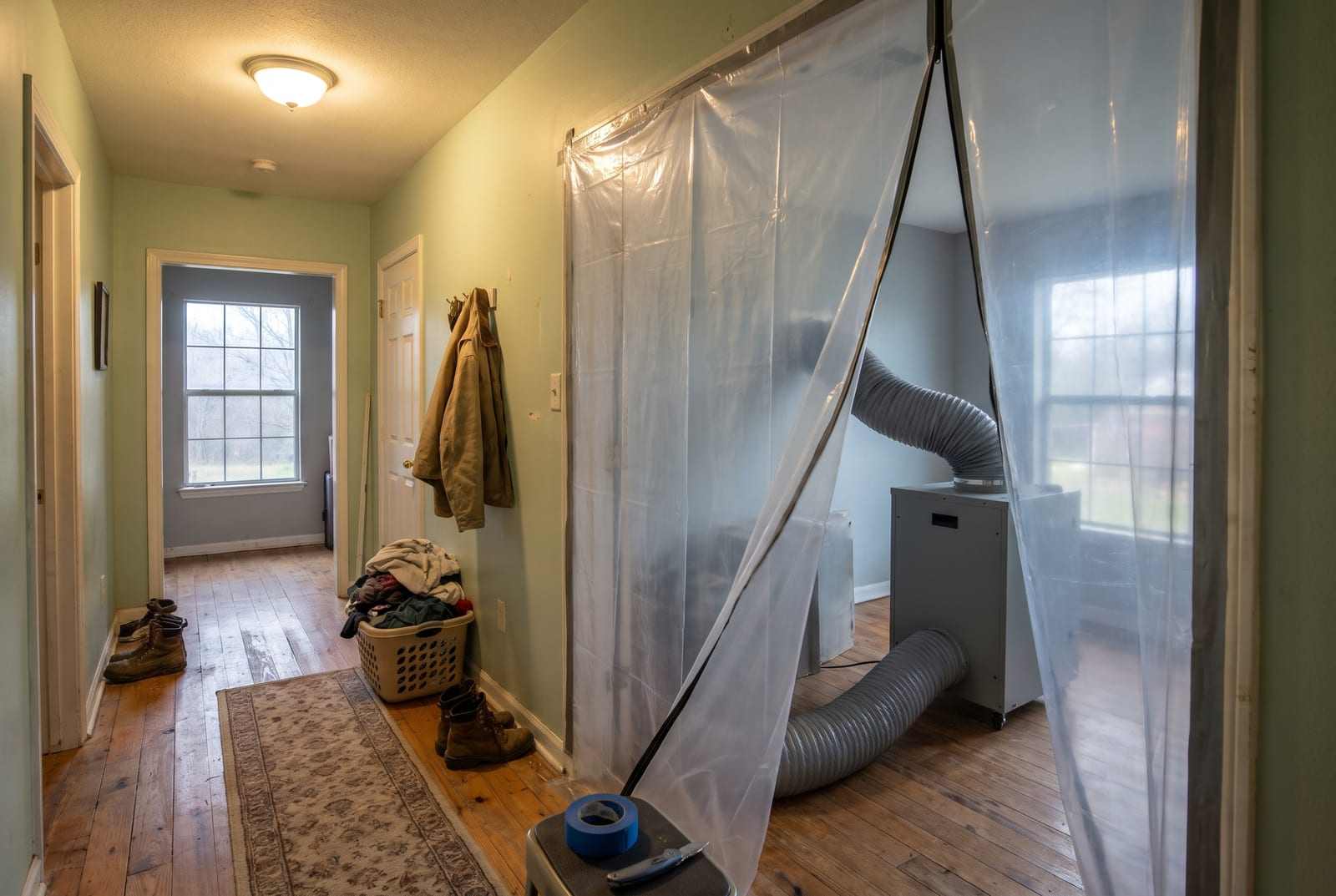
Containment goes up before anything is cut. Plastic sheeting is taped over the doorways around the work area, usually with a zipper door, so the spores and dust the work releases stay inside. Vents in the area are sealed so the AC does not carry spores through the building.
A HEPA air scrubber runs inside the containment and exhausts its air out of it. That keeps the work area under negative air: air flows in through any gap, not out, and the filters catch spores and fine dust as the work goes on.
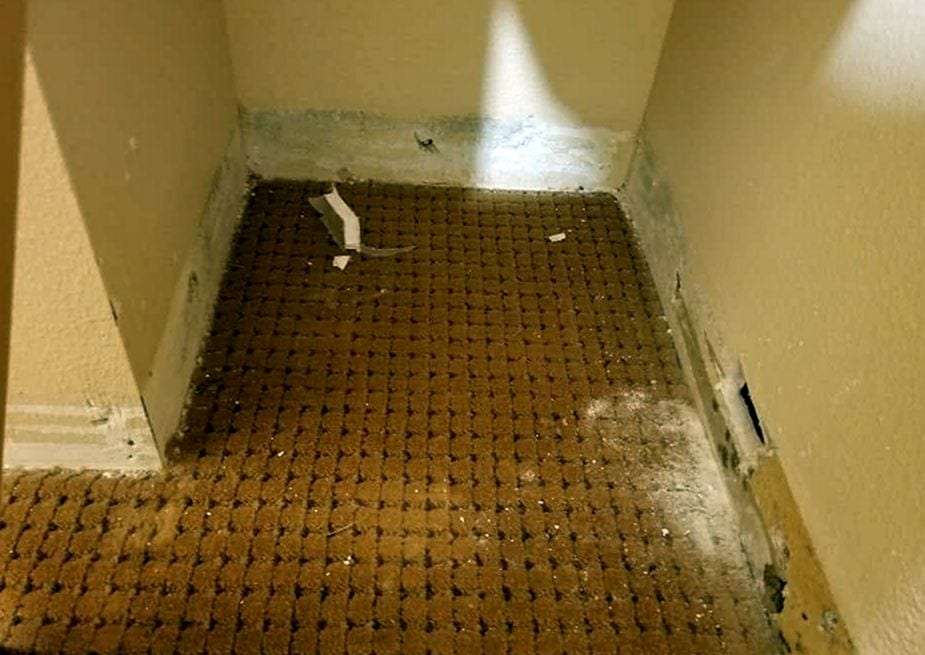
Then the affected materials come out. Drywall with growth on or inside it is cut out past the visible edge, insulation and pad are bagged and sealed inside the containment, and framing that stays is HEPA vacuumed, wiped and treated with an antimicrobial. The containment comes down once the area is clean and dry.
Humidity, Closed-Up Houses and AC Sweat
Gulf Coast air carries moisture most of the year. Mold needs moisture, something to feed on, such as drywall paper or dust, and mild temperatures, and a house here supplies all three. Keep the indoor humidity down and most mold never starts.
Closed-up houses are a common source. A rental between tenants or a home left with the AC off during a long trip fills with warm, humid air, and mold can grow on walls, cabinets and furniture with no leak at all. Set the thermostat higher instead of turning the AC off, so the system still dries the air.
The AC causes its own trouble. Cold ducts sweat when hot attic air reaches them and drip onto insulation and ceiling drywall, an oversized system leaves the air damp, and a clogged condensate line spills into the AC closet. Any of these, left alone, turns water damage into a mold job.
Texas Rules on Mold Assessment and Remediation
Texas law, administered by the Texas Department of Licensing and Regulation (TDLR), separates mold assessment from mold remediation. Assessment is the inspection and sampling that maps the mold and sets the plan for removing it; remediation is the removal and cleaning, and on a project the rules cover, the same company does not do both. The rules generally apply when the mold covers about 25 contiguous square feet or more, and some situations are treated differently. Ask TDLR or a licensed mold assessor how they apply to your property before the work starts.
Find the Moisture Source First
Mold that comes back almost always had its water source left in place. Check these first:
- Leaks you can see. Stains on ceilings, bubbling paint, a damp baseboard.
- The AC drain pan. Standing water or rust in the pan, or a float switch that keeps shutting the system off.
- The roof. Lifted shingles, flashing around vents, and stains on the decking seen from the attic after a rain.
- Plumbing. Under the sinks, behind the toilets and the washer, at the water heater and along the ice maker line.
- The crawlspace. In a pier-and-beam house: standing water, wet soil, a torn vapor barrier or blocked vents.
- Bathroom ventilation. A fan that works, vents outside rather than into the attic, and runs during and after every shower.
Bleach, Stains and Paint Over Mold
Does bleach kill mold?
On a hard, sealed surface such as tile, a bleach solution can kill and lift surface mold. On drywall and wood it does not reach the growth inside, and its water can feed what is left. The EPA does not recommend bleach as a routine way to clean up mold. Never mix bleach with ammonia or other cleaners.
How can I tell mold from a water stain?
A water stain is usually flat and tan or brown, with a darker ring at its edge, and stops growing once the leak stops. Mold looks fuzzy or speckled, in black, green, gray or white, smells musty and spreads. A moisture meter settles it: a dry stain is only a stain; a wet one means an active leak, and mold may follow.
Can I paint over mold?
No. Paint, even mold-resistant paint, covers the growth without removing it, and the mold keeps growing behind it while the moisture is there. Fix the source, remove the growth, dry the material, then paint.
Fix the Moisture, Then the Mold
Call about the mold you found, and the work starts with the moisture that feeds it.