
Emergency Help for Active Damage
What to do in the first minutes after a leak, a flood, a fire or a storm, and when to get out of the building.
When water, smoke or rain is still getting in, the first job is to keep people safe, the second is to stop the damage from spreading, and the third is to call. Say what happened, when it started and whether it is still spreading.
The First Ten Minutes
- Find the water shutoff and close it. For one fixture, use the valve under or behind it; for anything bigger, the main shutoff, often in a ground box near the street or where the line enters the house.
- Turn off power to the wet areas at the breaker panel, but only if you can reach the panel standing on dry ground.
- Move valuables, papers, medications and electronics to a dry room, and set furniture legs on foil or wood blocks.
- Take photos and video of the damage and its source before anything is moved or thrown out.
- Stay out of floodwater and sewage, and keep children and pets away from it: it is Category 3 water and carries bacteria.
Check a Symptom
Pick what you see, and get the first safe steps for it and the service that usually follows.
Pick the symptom closest to what you see, then press Show Steps.
A Stained or Bulging Ceiling
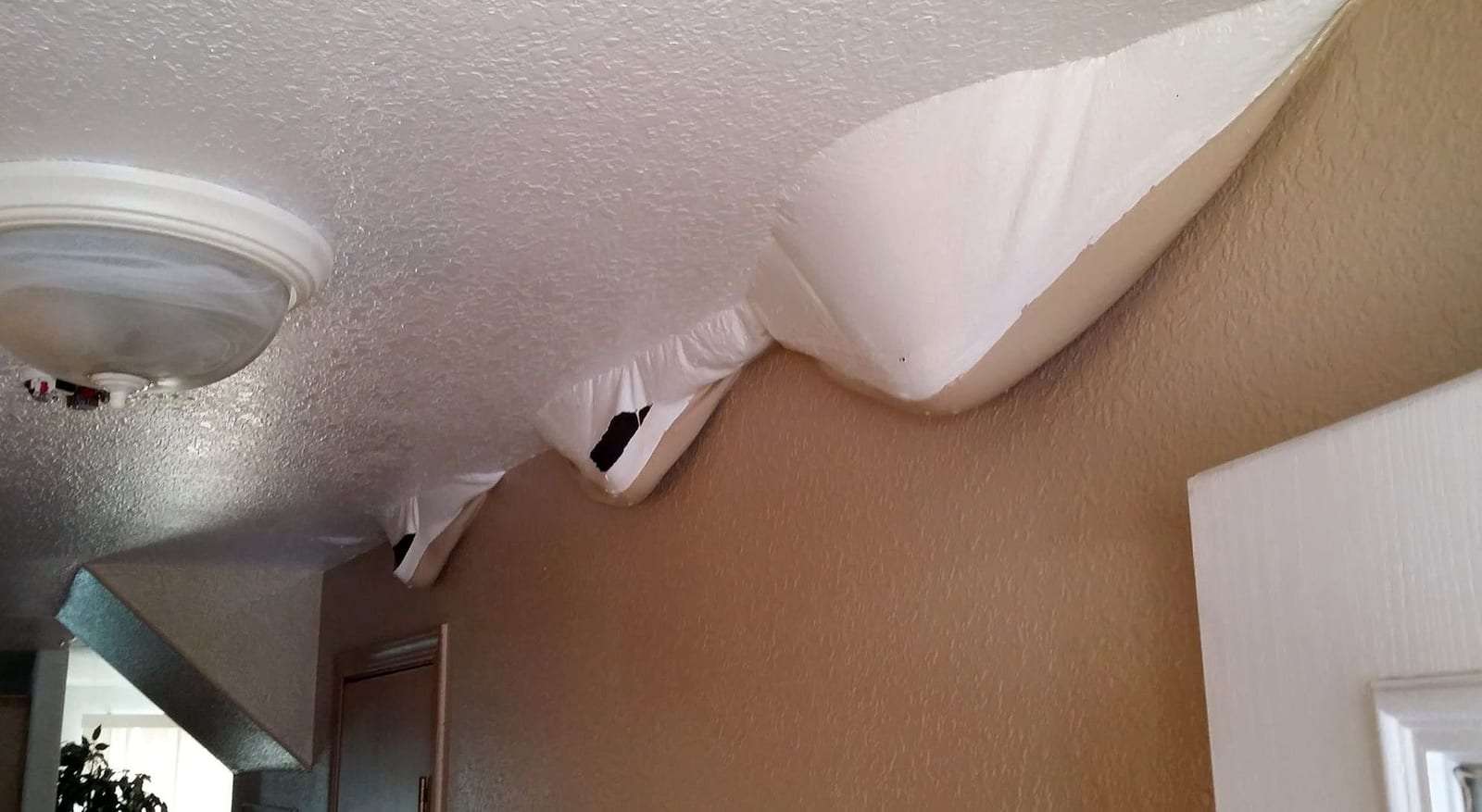
A brown ring on the ceiling means water is sitting on top of the drywall or soaking the insulation above it. When the paint starts to bulge, the drywall is holding water and can give way, bringing wet insulation down with it.
Switch off the circuit for any light or fan in that ceiling, move furniture out from under it, and keep people and pets out of the room. Set a bucket under any drip, and don’t push on the bulge. Then look for the source above: an upstairs bathroom, an AC drain pan in the attic, or a roof leak after rain. Opening the ceiling and drying the joists is part of water damage restoration.
Do and Don’t by Damage Type
| Damage type | Do | Don’t |
|---|---|---|
| Clean-water leak | Close the fixture valve or the main shutoff, switch off power to wet rooms, pull rugs and boxes out of the water | Run a household vacuum on a wet floor; switch on lights in a wet ceiling |
| Floodwater or sewage | Keep people and pets out, wear boots and gloves if you must go in, wash any skin it touched | Wade through it, let children near it, or try to save soaked carpet pad and mattresses |
| Mold | Keep the room closed, stop the moisture source, keep anyone with asthma or allergies away | Scrub, sand or bleach it, or aim a fan at it |
| Fire and smoke | Wait for the fire department’s all-clear, keep the HVAC off, air the rooms out | Wipe soot with a wet cloth, run the AC, or keep food that sat near heat or smoke |
| Storm damage | Stay clear of downed lines, catch drips inside, photograph the damage before cleanup | Climb a wet roof in wind, or walk or drive through a flooded street |
Freezes, Flooded Streets and Storm Roofs
Houston’s worst emergencies tend to come three ways. A hard freeze splits pipes in attics and outside walls, and the leak often starts only when the pipe thaws, so know where the main shutoff is before the cold arrives. Heavy rain and tropical storms flood streets and push water under doors: never walk or drive through it, since six inches of moving water can knock an adult down and floodwater is Category 3. Storms also bring wind, hail and falling oak limbs, and a tarp over the opening is what keeps the next rain out of the ceiling while storm damage repair is planned.
When a Building Isn’t Safe to Stay In
Is it safe to stay in the house with water on the floor?
Not in rooms where the water reaches outlets, cords, appliances or the breaker panel, or where a ceiling is sagging. Stay out of those rooms until the power to them is off. With sewage or floodwater inside, leave the affected floor until it has been cleaned.
When can we go back in after a fire?
Only when the fire department says the building is safe to enter. Even then, soot and smoke residue irritate the lungs, so keep children, older relatives and anyone with asthma out of smoky rooms until they are cleaned.
What if I smell gas?
Leave at once, without switching lights or appliances on or off, and call the gas company or 911 from outside. Don’t go back in until they say it is safe.
Can we stay in the house with mold?
A small patch in one closet usually doesn’t force anyone out; keep that room closed. A large area of growth, mold in the AC system, or someone in the house with asthma or a weak immune system are reasons to stay elsewhere until remediation is finished.
Should we leave after a tree hits the house?
Yes, if the roof or a wall is pushed in, a ceiling is sagging, or power lines are down on or near the house. Stay well away from the lines and report them to the electric utility.
Can we live in the house during the repairs?
Often, once the emergency is over. It depends on the water category, the rooms involved and the equipment running, all part of how a restoration job runs.
Damage Still Spreading
Once people are out of harm’s way and the water is shut off, call or book a visit.